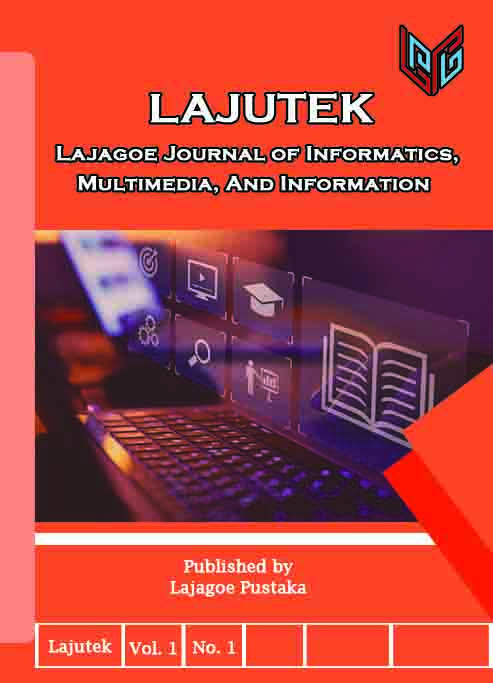
THE EFFECT OF USING AI-POWERED CHATBOTS ON STUDENTS' SELF-REGULATED LEARNING
DOI:
https://doi.org/10.61912/lajutek.v3i2.147Keywords:
AI Chatbot, Self-Directed Learning, Independent Learning, Educational Technology, Artificial IntelligenceAbstract
This study aims to examine the influence of AI-based chatbot utilization on students’ self-directed learning. The background of this research arises from the increasing adoption of Artificial Intelligence in higher education, particularly chatbots such as ChatGPT, which provide real-time explanations, instant feedback, and personalized learning support. A quantitative approach with a correlational design was employed. The sample consisted of 50 students selected through purposive sampling, and data were collected using an online questionnaire. The data were analyzed using descriptive statistics, normality tests, Pearson correlation, and simple linear regression. The results indicate that both the level of AI chatbot utilization and students’ self-directed learning fall into the moderate category. Pearson correlation analysis shows a very strong and significant relationship between AI chatbot use and self-directed learning (r = 0.836; p < 0.01). Simple linear regression further confirms that AI chatbot utilization has a positive and significant effect on self-directed learning (B = 0.718; p = 0.000). These findings suggest that AI-based chatbots play an important role as learning tools that enhance students’ ability to learn independently. The study recommends strengthening AI literacy, providing ethical use guidelines, and integrating chatbots into the digital learning ecosystem in higher education.
References
Bahmar, I. W. H. H. D. A. R. A. A. K. A. M. (2024). Analisis Pengetahuan Mahasiswa tentang Penggunaan Chatbot Berbasis AI Pada Proses Pembelajaran. Jurnal Pendidikan Terapan, 02(02), 133–142.
Broadbent, J., & Poon, W. L. (2015). Internet and Higher Education Self-regulated learning strategies & academic achievement in online higher education learning environments : A systematic review. The Internet and Higher Education, 27, 1–13. https://doi.org/10.1016/j.iheduc.2015.04.007
Eka, M., Asih, M. S., & Saragih, R. (2024). A Narrative Exploring the Potential of ChatGPT : How AI Models Are Changing the Way We Interact with Technology. Journal of Computer Science Artificial Intelligence, 1(1), 24–29.
Holmes, W., Bialik, M., & Fadel, C. (2019). Artificial Intelligence In Education. Center for Curriculum Redesign.
Kasneci, E., Sessler, K., Küchemann, S., Bannert, M., Dementieva, D., Fischer, F., Gasser, U., Groh, G., Günnemann, S., Hüllermeier, E., Krusche, S., Kutyniok, G., Michaeli, T., Nerdel, C., Pfeffer, J., Poquet, O., Sailer, M., Schmidt, A., Seidel, T., … Kasneci, G. (2023). ChatGPT for good ? On opportunities and challenges of large language models for education. Learning and Individual Differences 103, 103(March). https://doi.org/10.1016/j.lindif.2023.102274
Kuswandi, D., & Ulfa, S. (2023). Eksplorasi Dampak Chatbot Bertenaga AI ( ChatGPT ) Pada Pendidikan : Studi Kualitatif Tentang Manfaat dan Kerugian Exploring the Impact of AI-Powered Chatbots ( ChatGPT ) on Education : A Qualitative Study on Benefits and Drawbacks. Jurnal Pekommas, 8(2), 157–169.
Lathifa, & Dr.TataSutabri. (2024). PERAN ARTIFICIAL INTELIGENCE DALAM MEMBANTU PEMBELAJARAN JARAK JAUH BERBASIS E –LEARNING. Jurnal Ilmiah Sains Dan Teknologi, 2(8), 133–138.
Lyu, Y., & Ding, R. (2025). Discovering Self-Regulated Learning Patterns in Chatbot-Powered Education Environment. Computers and Society. https://doi.org/doi.org/10.48550/arXiv.2510.01275
Maulana, U. I. N., & Ibrahim, M. (2025). OPTIMALISASI CHATBOT BERBASIS ARTIFICIAL INTELEGENCE. Jurnal Ilmiah Pendidikan Citra Bakti, 12, 836–850.
Oliveira, F. De, H, I. D., G, M. S., & J, L. H. (2023). The role of ChatGPT in higher education: Benefits, challenges, and future research directions. Journal of Applied Learning & Teaching, 6(1), 41–56. https://doi.org/https://doi.org/10.37074/jalt.2023.6.1.29
Pitts, G., & Motamedi, S. (2025). Telematics and Informatics Reports Understanding human-AI trust in education. Telematics and Informatics Reports, 20(November), 100270. https://doi.org/10.1016/j.teler.2025.100270
Rahmad, I. N., Rista, L., Muhajarah, K., Karyati, Z., & Yuliyani, R. (2024). Analisis Peran Penggunaan AI Chatbot dalam Proses Pembelajaran terhadap Pemahaman Konsep dan Kemandirian Belajar Siswa. Edu Cendikia: Jurnal Ilmiah Kependidikan, 04(03), 1726–1732. https://doi.org/10.47709/educendikia.v4i03.
Siemens, G. (2006). Connectivism : A learning theory for the digital age, International Journal of Instructional Technology and Distance Learning, 2. http://www.itdl.org/Journal/Jan_05/article01.htm
Zimmerman, B. (2014). Becoming a Self-Regulated Learner : An Overview Becoming Learner : Self-Regulated Overview. December. https://doi.org/10.1207/s15430421tip4102